The Best Time of Year for a Sunset Sail in Kona, Month by Month

December through April is the best time for a sunset sail in Kona, the stretch when humpback whales are working the coast and the winter months run drier than Kona's odd, upside-down rain year. June and July are the runner-up window, with the longest golden hour of the year and sunsets pushing past 7:00 PM. September and October are the ones I'd steer most people away from, not for the sail itself but for the wettest weather on the calendar. I've sailed this coast since 2016, and the window you pick changes more about your evening than most people expect — not just the light, but the whales, the crowd at the rail, and how likely vog is to soften the horizon.

Quick answer
December through April is the best window for a Kona sunset sail, when humpback whales pass the coast and the winter months are the driest of Kona's inverted rain year. June and July run a close second for the longest daylight, with sunsets near 7:08 PM. September, the wettest month on the coast, is the one to avoid.
Key takeaways
- Best window: December through April, whale season plus drier winter weather
- Runner-up: June and July, the longest golden hour, sunset near 7:08 PM in early July
- Avoid: September, Kona's wettest month with the highest chance of an afternoon shower spilling into sail time
- Counterintuitive fact: Kona is the only part of Hawaii with a summer rain peak, not a winter one
- Best time of day is fixed by sunset itself, and Hawaii keeps one clock all year, so the swing is barely 90 minutes
- Christmas through New Year sells out first; September and October are the quietest weeks to book
The Kona Sailing Year in One Table
A quick read of how each stretch of the year plays out for a sunset sail, before the month-by-month detail below.
| Months | Evening sky & rain | On the water | Crowds & prices | Call |
|---|---|---|---|---|
| December–March (whale winter) | Clearer skies, occasional light shower, earliest sunsets of the year | Calm lee water, best whale odds of the year | Holiday weeks sell out first; prices flat year-round | Best overall |
| April–May (shoulder) | Transitional, generally dry, sunsets lengthening | Calm, whale season tailing off by May | Lighter crowds than winter | Strong value pick |
| June–August (long light) | Driest stretch, latest sunsets near 7:08 PM | Calm, no whales, occasional manta activity | Summer family travel bumps demand | Good for longest evenings |
| September–November (quiet fall) | Kona's wettest stretch, showers common at sail time | Still calm on the lee, but skies less reliable | Quietest weeks of the year to book | Skip September if you can |
The short version: winter wins on whales and dry skies, summer wins on daylight, and fall is the one stretch where the weather works against you.
Sunset O'Clock: When the Sun Actually Drops in Kailua-Kona
Sunset in Kailua-Kona ranges from about 5:45 PM in late November to 7:08 PM in early July. Hawaii observes no daylight saving time, so unlike most of the mainland, the whole yearly swing is under an hour and a half — there's no clock change to throw off your booking.
| Month | Typical sunset |
|---|---|
| January | 6:06 PM |
| February | 6:24 PM |
| March | 6:34 PM |
| April | 6:42 PM |
| May | 6:52 PM |
| June | 7:04 PM |
| July | 7:06 PM |
| August | 6:52 PM |
| September | 6:27 PM |
| October | 6:01 PM |
| November | 5:45 PM |
| December | 5:48 PM |
November holds the earliest sunset of the year and the year's shortest evening, while early July holds the latest. Either end of that range still fits comfortably inside a standard 90-minute sail.
When Humpbacks Crash the Party (December Through April)
Humpback whales arrive off the Kona coast in late November, and the season runs December through April, peaking January through March. The Kohala coast has the island's most frequent whale sightings, which is exactly why the Kohala-coast dinner departure tends to post the best whale stories of any sail on this site. A winter sail costs the same as a summer one, so this window is close to a free upgrade — check availability for that route.
Kona's Upside-Down Rain Year
Most of Hawaii gets wetter in winter. Kona does the opposite. It's the only area of Hawaii with a summer rainfall peak, and the coast sees about 27 inches of rain a year, with July and September the wettest months.
Showers tend to land late afternoon into early evening, which is exactly sail time, but they usually settle over the slopes above town rather than the coast itself, and the coastline often stays clear while the mountainside gets soaked. Winter, by contrast, is the drier season on this particular stretch of coast — one more reason December through April edges out summer for a sail.
Vog, Clouds, and the Green Flash
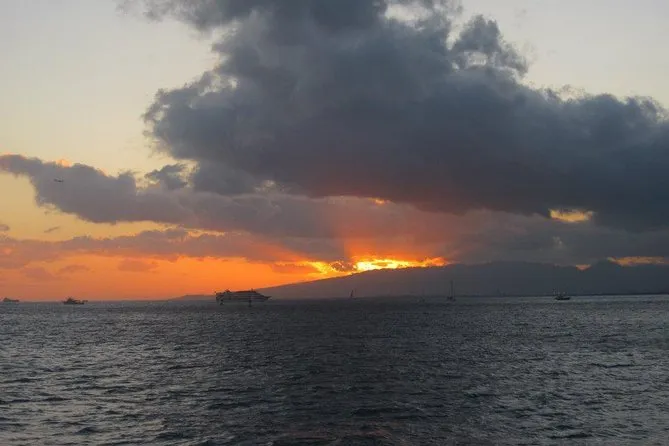
Two things affect the actual look of the sunset more than the calendar does. Vog, the volcanic haze that drifts across the Big Island, can mute or redden the horizon, and it lingers longest on light-wind evenings when there's nothing to push it offshore. There's no season that's immune to it, though it tends to clear faster on breezier days.
The green flash, the brief flare of green light some sailors chase at the exact moment the sun drops below the horizon, is real but genuinely rare — it needs a clean, haze-free horizon and lasts a second or two at most. I've seen it maybe a dozen times in years of sunset sails. Worth watching for, never worth expecting.
Why the Water Stays This Calm
Kona means leeward, and it's the reason this coast works so well for an evening on the water: Hualalai and Mauna Loa block the trade winds that roughen up the windward side of the island, so the water off Kailua-Kona stays unusually calm most evenings, whatever the month. If seasickness is the thing holding you back from booking, this is the honest physics behind why most guests never have a problem here — the swell that makes other island sails rough simply doesn't reach this coastline.
Fitting In the Manta Rays
Manta ray night snorkels run on their own schedule, and the timing doesn't stack neatly with a sunset sail the way people hope. The first manta boats also track sunset, with 5:00 to 6:30 PM starts, so sailing and manta snorkeling on the same evening rarely works out logistically. The fix is simple: sail one evening, snorkel the mantas the next, and you get two golden hours instead of trying to cram both into one rushed night.
Quiet Weeks, Packed Weeks
Christmas through New Year and spring break weeks sell out first on this coast, so book those windows two to three weeks ahead if you can. September and October are the quietest stretch of the year for tourist traffic generally, which sounds appealing, but it lines up with the wettest weather on the calendar for a sunset sail specifically — a genuine tradeoff, not a clean win. Couples looking for the smallest crowd at the rail without the September rain risk do best in late April or early May, after whale season winds down and before the summer family crowds build.
My Pick of the Year
If I had to pick one month, it's February — peak whale season, sunsets a comfortable 6:24 PM, and dry winter skies on this coast. If daylight matters more to you than whales, June or July stretches the golden hour out past 7:00 PM and still avoids the fall rain. Either way, you're better off here than most places in the world for booking a sail with real confidence. Book a Kona catamaran sail and see the full lineup on the homepage.
Frequently Asked Questions
What's the best month overall for a Kona sunset sail?
February, for the combination of peak whale season, dry winter skies, and a comfortable 6:24 PM sunset. Any month December through April is a strong choice.
Do sails run in winter?
Yes, daily. Winter is actually the better season on this coast — drier than summer and the only window with whales.
How common are rain cancellations?
Uncommon on the coast itself. Kona's rain tends to land on the slopes above town rather than the shoreline, and the wettest months, July and September, still see plenty of clear sailing evenings.
Are whale sightings guaranteed December through April?
No sighting is ever guaranteed, but the odds are strongest in this window, peaking January through March, especially on the Kohala coast route.
What's the best month for calm water?
Every month is calm here relative to other coasts — Kona is leeward, sheltered by Hualalai and Mauna Loa from the trade winds year-round. There's no genuinely rough season for a sunset sail on this stretch.
Can I do the sunset sail and a manta ray snorkel on the same evening?
Not really. Both activities start around sunset, so the timing conflicts. Book them on consecutive evenings instead and you'll enjoy both properly.
Does the check-in time change with the season?
Yes, on the Waikoloa route — check-in shifts to 5:00 PM in summer and 4:30 PM in winter, matching the season's earlier sunset.
There's no bad month to sail this coast, but some are genuinely better than others. Winter gives you whales and dry skies, summer gives you the longest light, and fall asks you to accept a real chance of rain for the sake of quieter crowds. Once you've picked your window, whether the sail earns its price and what to have on deck round out the planning.